When a factory produces millions of canned products every year, coordinating production, warehouse operations, and logistics stops being an operational challenge and becomes a strategic necessity.
In the food industry, every process is connected—from the origin of raw materials to the product that ultimately reaches consumers.
Production, traceability, lot control, quality management, storage, and distribution all form part of the same chain. When any of these elements are not aligned, inefficiencies appear: inventory errors, planning difficulties, or a lack of visibility into what is actually happening across operations.
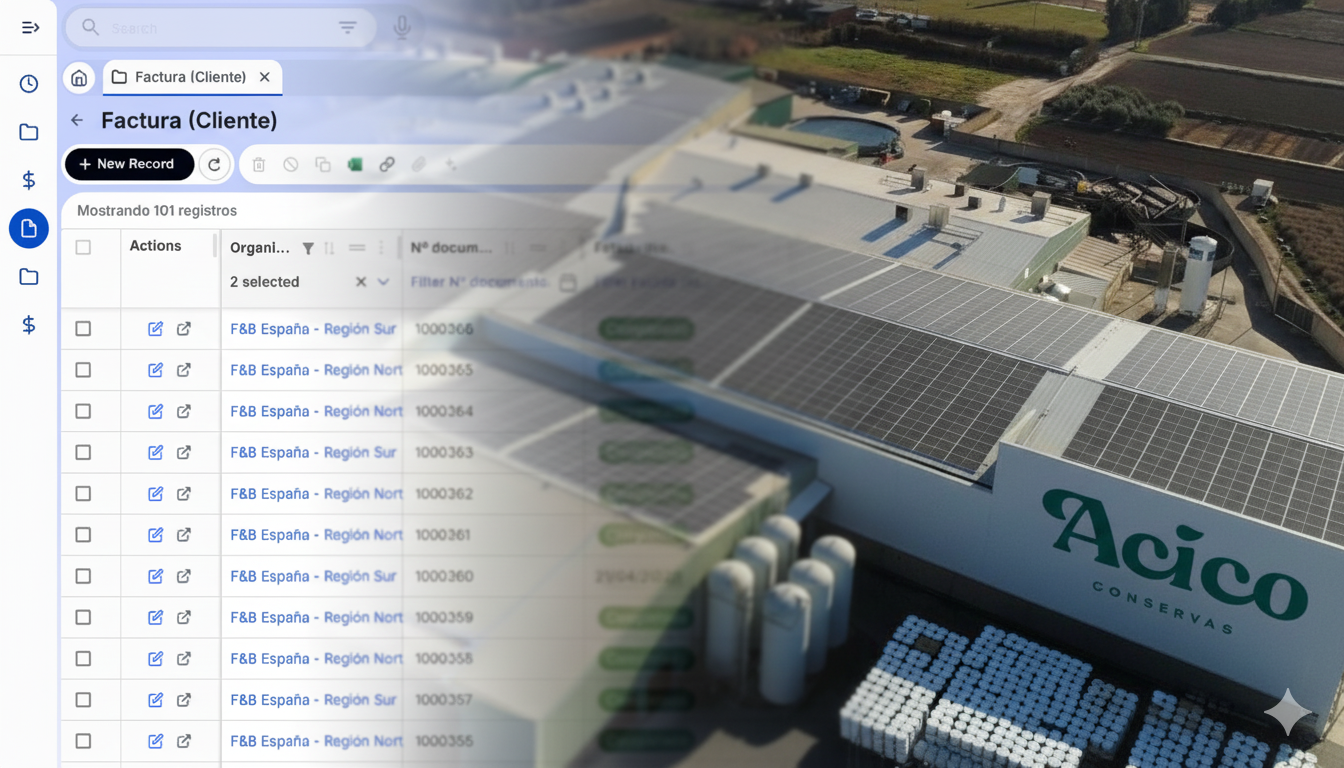
The case of ACICO, a Spanish company specialized in the production of canned vegetables and legumes, illustrates how an ERP for food production can integrate all these processes into a single management platform.
A cannery with more than 50 years of experience
ACICO has been producing canned vegetables since 1970, gradually expanding its portfolio to include additional product lines such as legumes and vegetables.
The company operates with an industrial structure that combines:
- a production facility in Cortes (Navarra)
- a logistics center in Bisimbre (Zaragoza)
From these facilities, products are manufactured and distributed both under ACICO’s own brands and for European private labels.
Managing production at this scale requires the efficient coordination of multiple industrial processes.
The challenge: connecting production, traceability, and logistics
For companies in the food industry, the challenge is not only about producing goods.
The real challenge lies in managing the entire product flow, including:
raw materials → production → packaging → storage → distribution
When these processes are managed with disconnected tools, several common problems arise:
- difficulty knowing the real inventory level
- production planning based on estimates
- complex traceability between raw materials and finished products
- lack of coordination between production and logistics
For companies operating with high manufacturing volumes, these misalignments can quickly affect operational efficiency.
Implementing Etendo: integrating the entire operation
The implementation of Etendo ERP for food production focused on connecting industrial and logistics processes within a single platform.
The goal was not simply to digitize tasks, but to gain full visibility of the entire operation.
The change is most noticeable in the day-to-day work on the plant floor. Before, we had to confirm many things between departments; now the information is in the system and everyone works with the same reference.
Pablo Lacasa, CEO of ACICO
Production planning based on real data
The ERP structures manufacturing orders and production planning while taking into account raw material availability and inventory status.
This enables:
- more accurate production planning
- better purchasing forecasts
- greater control over raw material consumption
Traceability integrated throughout the process
In the food industry, traceability is a fundamental requirement.
Each lot must be traceable from the origin of raw materials all the way to the finished product.
Integrating this information into the ERP allows:
- full lot traceability
- monitoring of the production process
- fast access to information during audits
Traceability moves from being a documentation exercise to becoming part of daily operations.
Warehouse and distribution connected to production
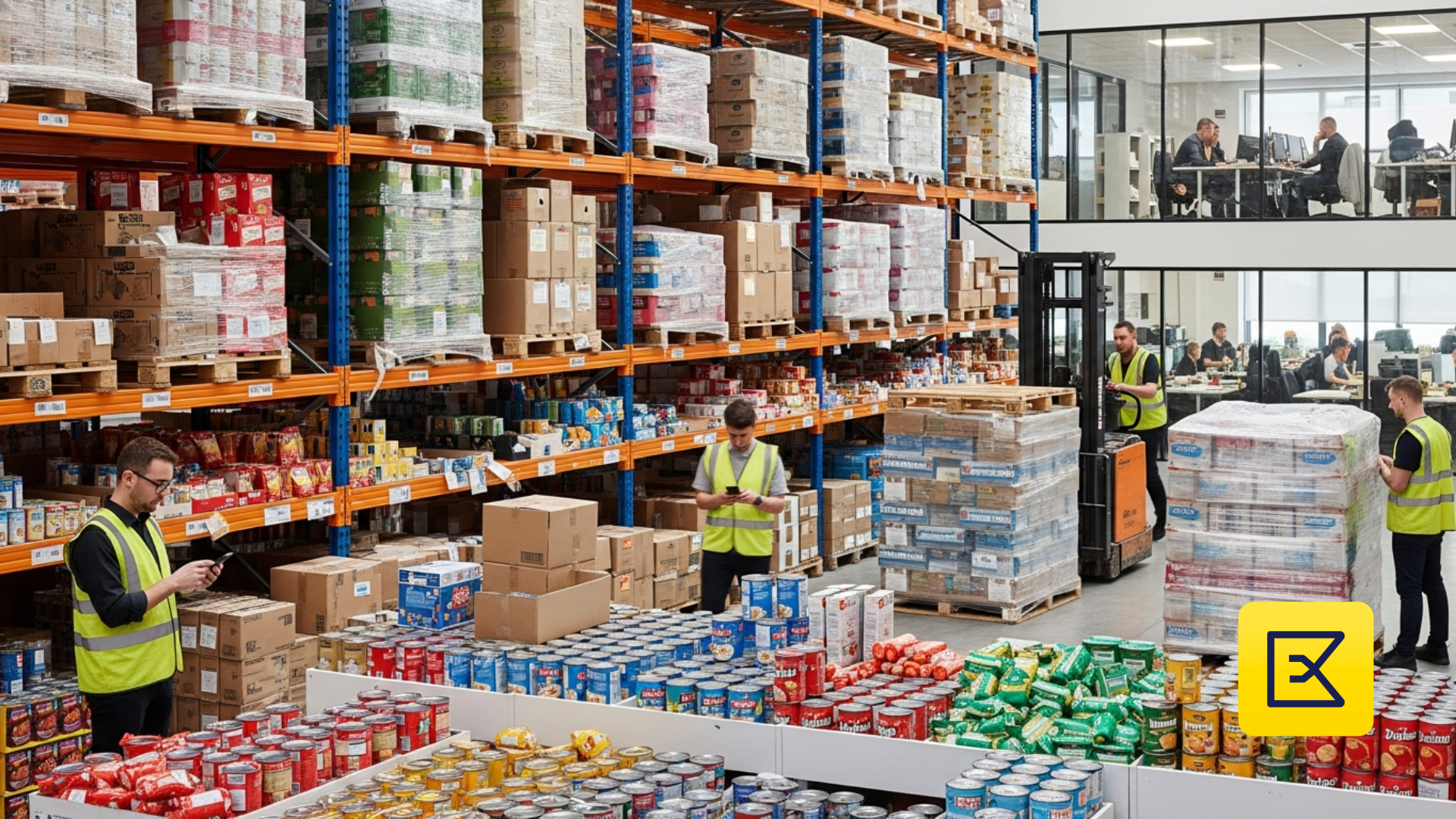
The ACICO logistics center manages labeling, packaging, and product dispatch, making coordination with the production plant essential.
With Etendo:
- inventory updates in real time
- warehouse movements are automatically recorded
- order preparation is coordinated with production
This improves shipment accuracy and reduces logistics incidents.
FAQ – ERP for food production
Why is an ERP important in the food industry?
Because it integrates production, traceability, inventory, and distribution into a single management system.
How does it improve traceability?
Etendo records raw materials, lots, production processes, and logistics movements in real time.
Can it connect production with the warehouse?
Yes. It allows manufacturing orders to be coordinated with inventory and order preparation.
Summary
ACICO is a Spanish company specialized in the production of canned vegetables and legumes, with more than five decades of experience in the food industry.
The implementation of Etendo ERP for food production enables the integration of production, traceability, and logistics within a single platform, improving operational visibility and coordination across the different areas of the company.





Leave a Reply